Sheesha: A Smile in the Mirror

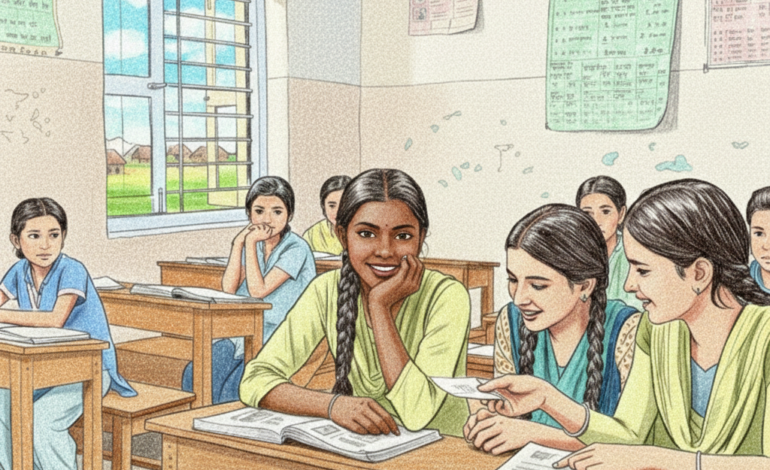
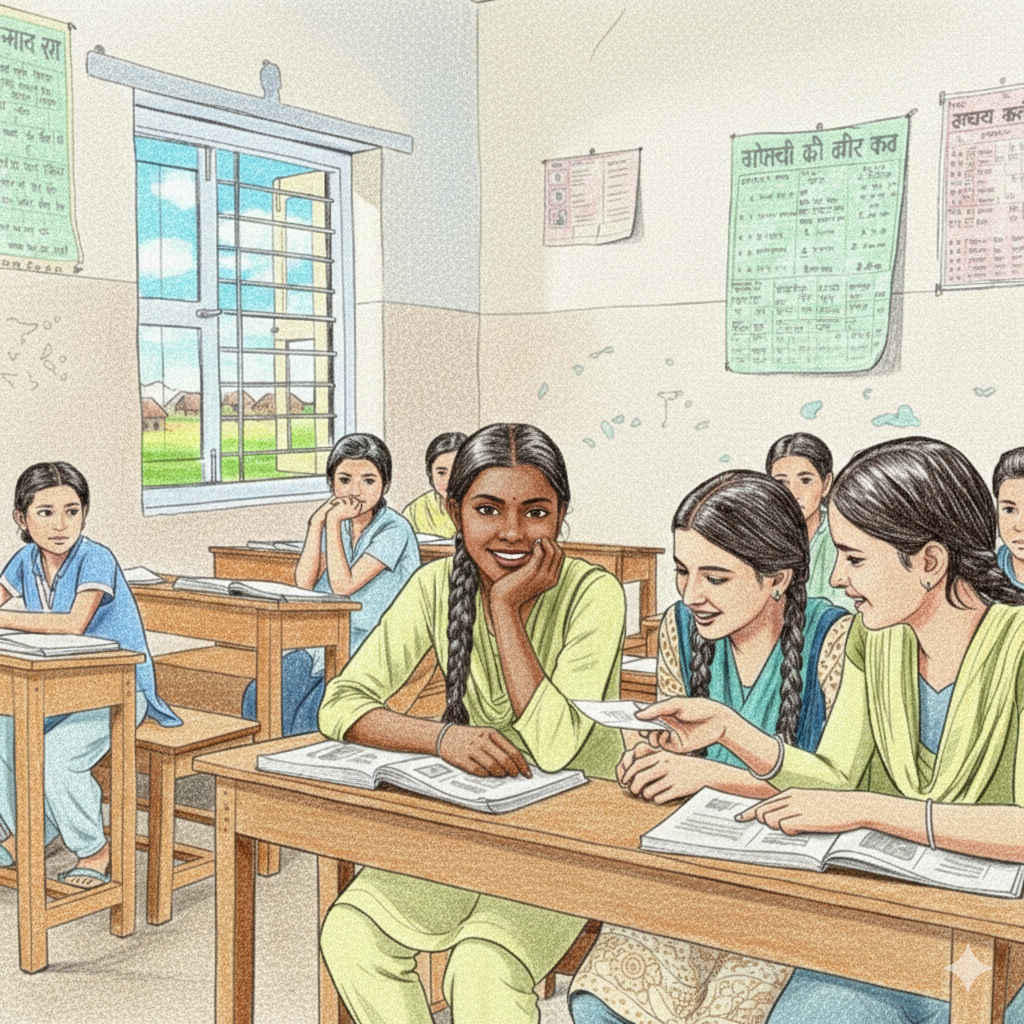
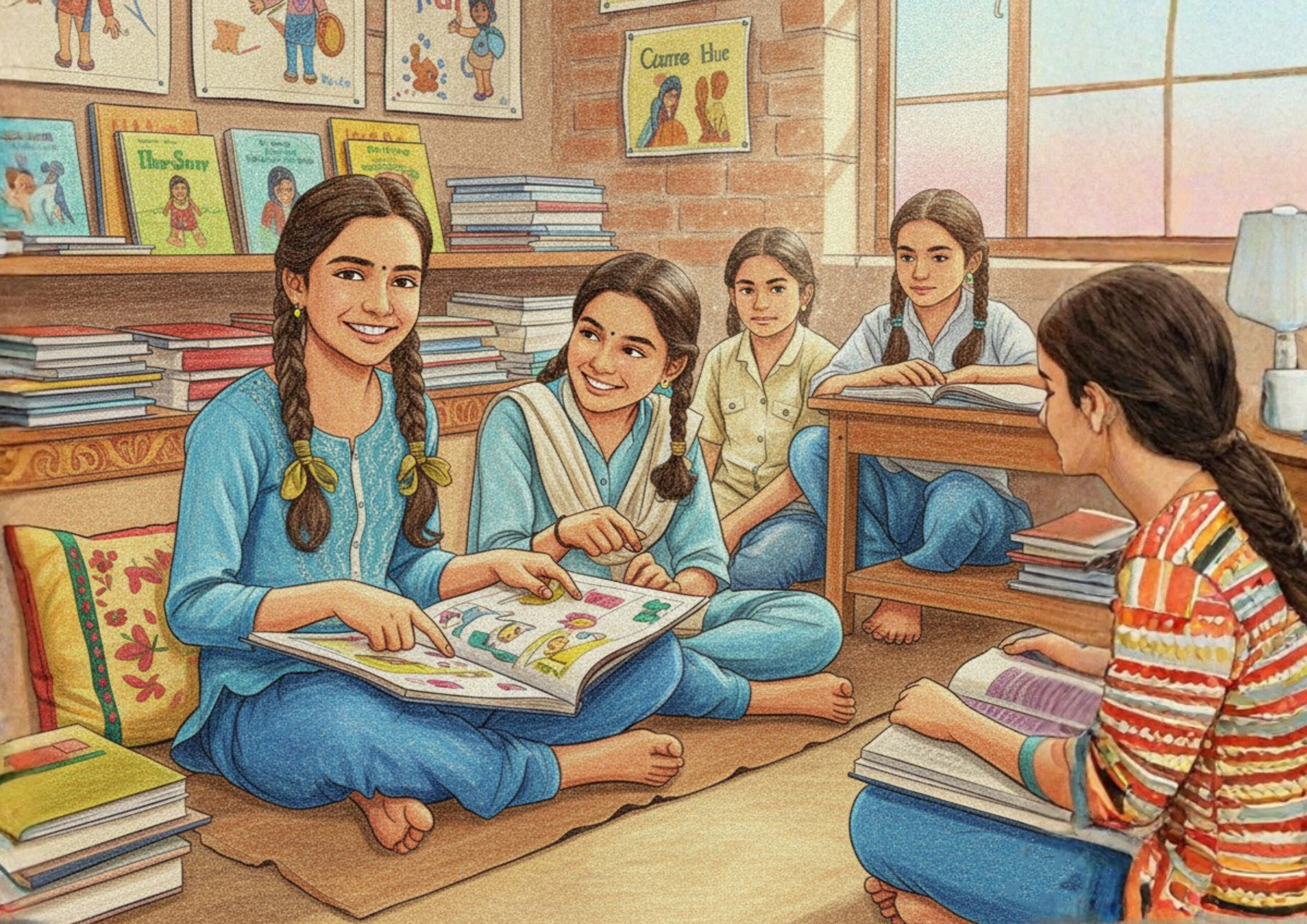
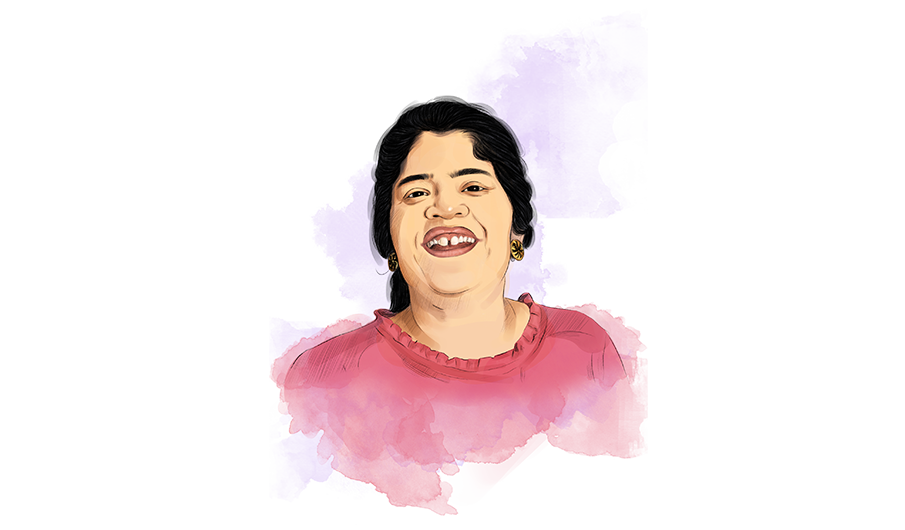
Ragini did not have many friends. She spoke less, and when people looked at her, she felt they were noticing the marks on her face and her skin tone—things she did not like about herself. She avoided speaking in class because she feared attention. If she spoke, everyone would look at her, and she did not like being looked at.
Ragini loved reading. During lessons, she often looked out of the window. Outside felt safe—trees, air, soil—like no one was judging her there. One day, the teacher took the class outside to study. “Look around carefully,” she said. Ragini noticed dark marks on tree trunks, torn edges on leaves, cracks in the soil, and insects in many colours. None of them were the same, yet everything looked beautiful. For the first time, she thought: these things also have marks and cracks, and still they look good.
After that, Ragini began waiting for these classes. One day, the teacher brought a mirror. Ragini panicked because she did not like looking at herself. The teacher explained a rule: each child would look at themselves for one minute, and while one child looked, no one else would.
When Ragini’s turn came, she resisted, but the teacher encouraged her gently. Ragini held the mirror up. At first, she saw only what she disliked. Later, the teacher asked everyone to write a love letter to themselves to open on graduation and posed one question: “If the things you don’t like disappeared, would you still be the same person?”
When Ragini wrote her letter, she realised something new—she liked her smile. She still spoke less, but she now looked forward to these classes, because each time, she saw herself with a little more kindness.
What We Can Learn:
– Build safety before confidence: Privacy and clear rules (“no one else will look”) reduce fear.
– Use nature as a mirror: Observing “imperfections” in nature can shift self-judgement.
– Reflection changes self-talk: A love letter helps children practise kinder inner language.
– Ask questions that stay: The right question can slowly reshape how a child sees themselves.
(This story is collected and shared by Shiksharth)