Books Changed Indu’s World

Indu Baghel walked to Primary School Lathipara every day with her friends through the lanes of village Rokel. She enjoyed school—playing, laughing, and joining activities. But when it was time to read, Indu would go quiet. Reading felt difficult, and she often avoided speaking in class.
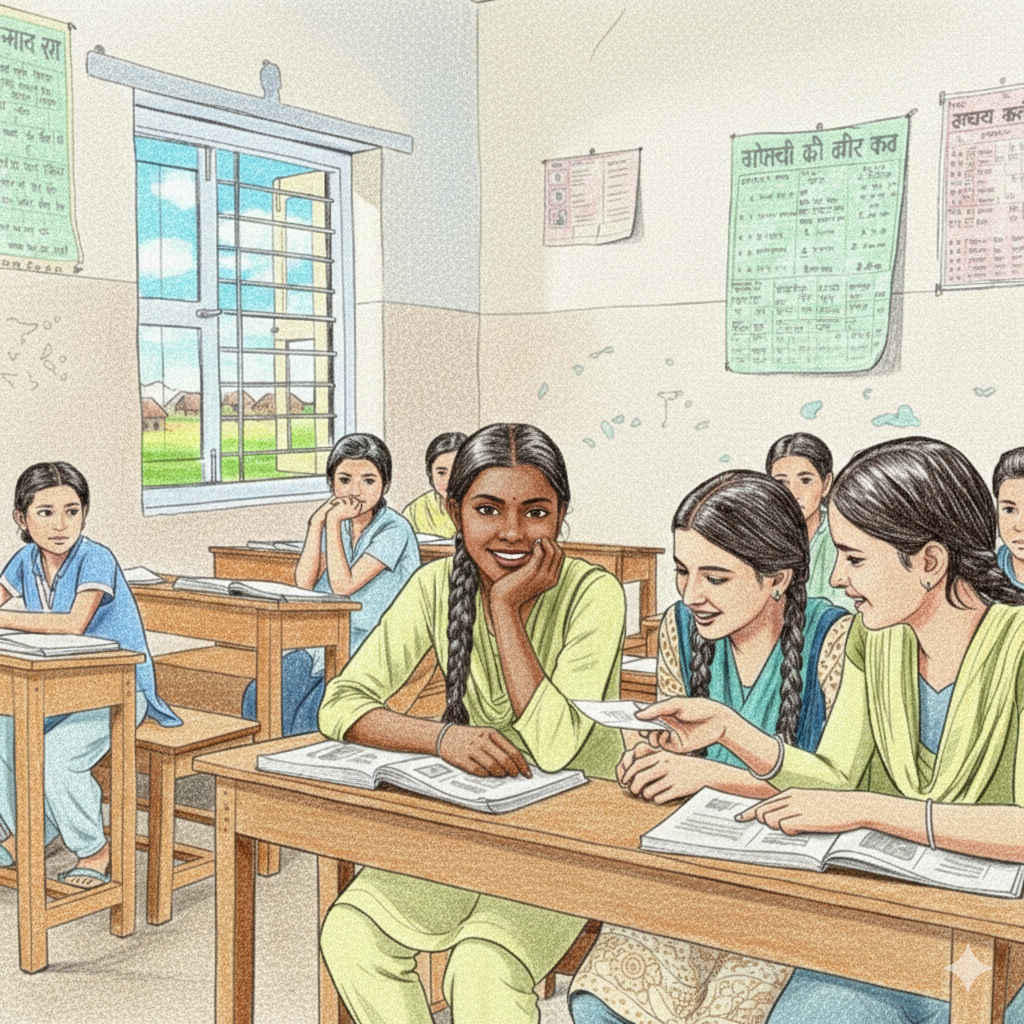
Indu had a friend named Kunti who could read fluently. Whenever Kunti opened her book, Indu watched closely, amazed. When the teacher asked Indu to read, she tried, got stuck, and sat down in embarrassment. Still, she kept looking at Kunti’s book, as if she wanted to find her own words there.
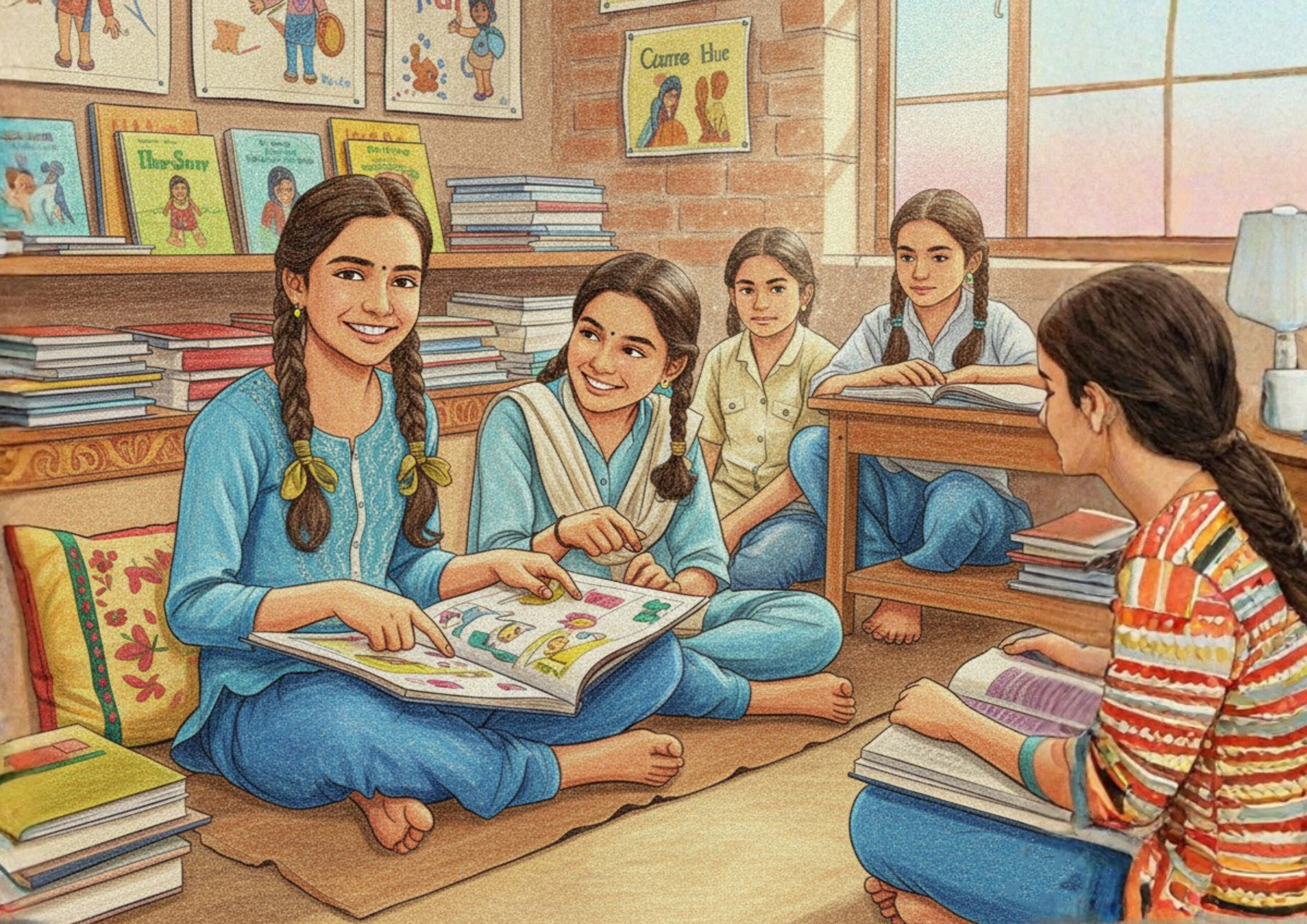
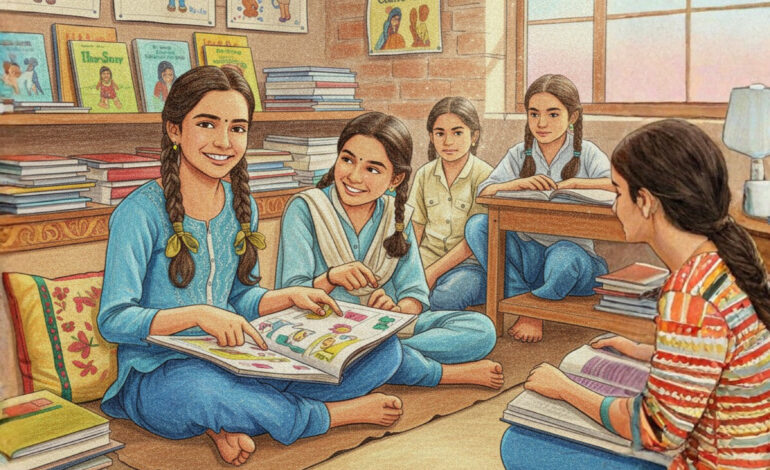
One day, the teacher set up a reading corner in the classroom. “Anyone who wants can choose a storybook, sit comfortably, and read,” she said. For Indu, this felt like a safe chance—no pressure, no fear. She began picking colourful picture storybooks, tracing letters with her finger, and understanding stories through pictures.
Days turned into weeks. Indu slowly started joining words, reading more often, and gaining confidence. Soon, she became one of the best readers in the class and even helped others when they struggled. Today, Indu loves books. She does not just read words, she lives those stories. The Indu who once feared reading is now the most regular member of the school library.
What We Can Learn:
– Create low-pressure spaces: A reading corner gave Indu a safe place to try without fear of mistakes.
– Start with visual support: Picture storybooks helped her understand meaning and stay interested.
– Practice regularly: Small daily reading moments helped her build fluency over time.
– Confidence grows with support: With opportunities and encouragement, Indu moved from silence to leadership
(This story is collected and shared by Shiksharth)